1+1=3
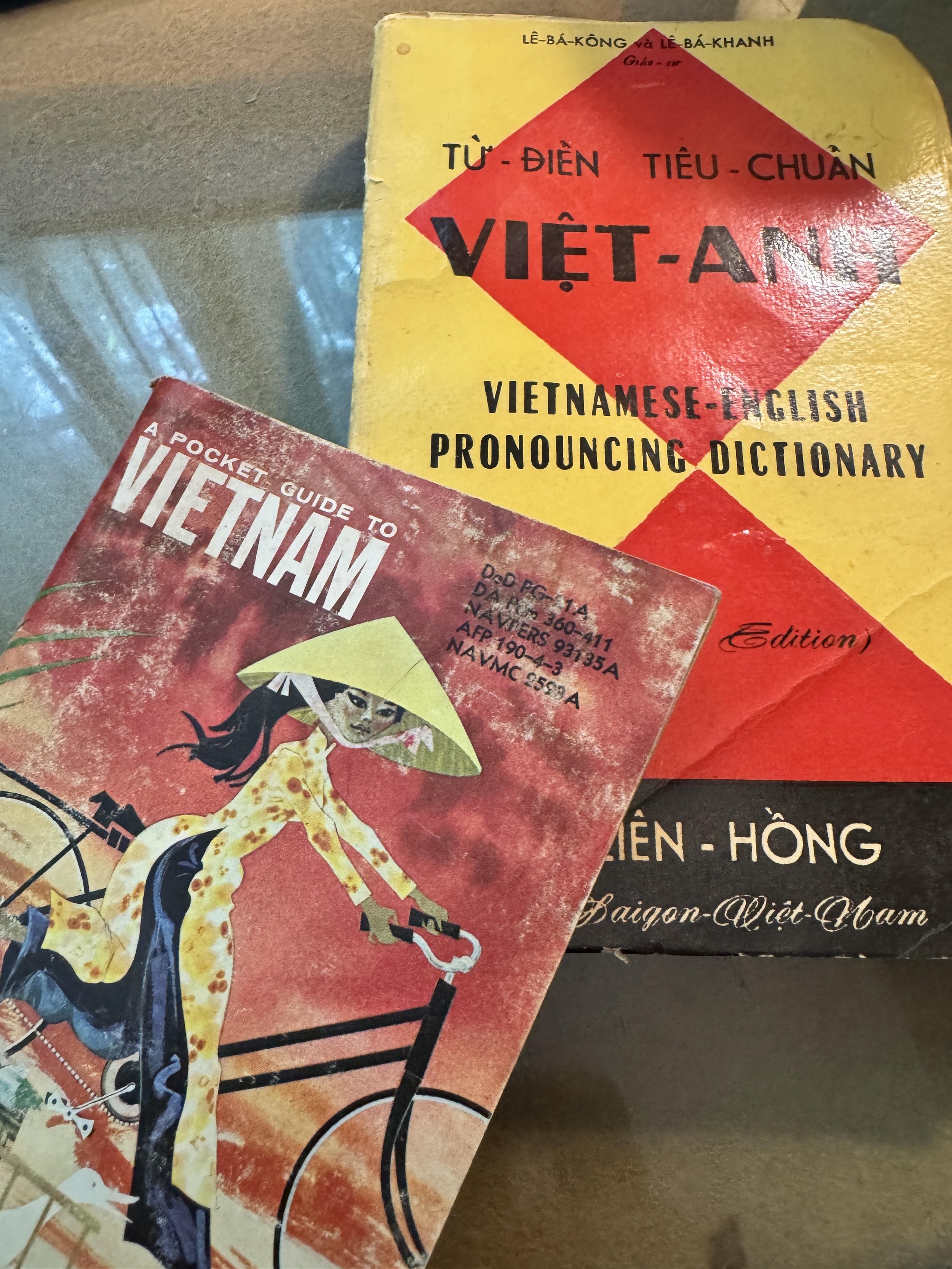
We deal in old books, and as book dealers who have not yet risen to the lofty ranks of the best auction houses and celebrity book slingers, we often acquire our inventory in lots that we have to sort through to find the books worth selling.
As part of this initial triage we’ll quickly consult a number of sources to get an idea of a fair market price in order to do the first sort into “sell,”donate,” or, in rare cases “keep for our own collection” piles. And when I say “rare cases,” I’m talking about a category that we continue to raise the bar for admission lest we slip into the “hoarder” category ourselves. We’d rather not end up like the Collyer brothers.
Anyway, one thing I’ve certainly learned over the years is that “Wow! Cool!” and “valuable” often don’t go together, especially when it comes to a category I’m particularly interested in: Cold War-era printed artifacts. While they might make my heart rate go up when I come across them, it doesn’t mean that the market places much value in them. But that’s OK. More for me.
But as most collectors discover at some point, “value” doesn’t have to mean what someone will pay for something. Sometimes the value is in the story the objects bring with them, even if that value’s not immediately obvious. And sure, while some might argue that a story and $10 might buy you a swanky coffee these days, it’s kinda hard to dispute that the story will stick around long after the money.
Case in point:We recently acquired a lot containing Pocket Guide to Vietnam and Viet-Anh: Vietnamese-English Pronouncing Dictionary. As you can probably tell from the picture, these two paperbacks aren’t in particularly great shape and as you can probably guess, neither is worth all that much on the open market. In fact, when I first came across them during our initial triage process I may have raised an interested eyebrow (born in 1968, the Vietnam War was a big topic of conversation in my family when I was growing up), but I had enough experience to know that they weren’t going to be worth enough to bother selling.
But then I looked inside them and discovered that both were printed in 1962, a fact tougher to discern about the dictionary since, as a book printed in Vietnam, it didn’t have the same kind of copyright page as books printed in the US and UK. I also noticed that the flyleaf of the dictionary was signed by a Capt. L. Waldenburg. Considering that both had similar levels of wear and were close to each other in the pile I was sorting through, it didn’t seem too much of a stretch to conclude that both were owned by the same person.
A little historical research made me more confident about my conclusion. 1962 was the year the US transitioned from “advising” the government of Vietnam to a more direct role tactically supporting the Vietnamese government against the Viet Cong insurgency. The smaller A Pocket Guide to Vietnam booklet was published by the US Government to hand out to the 10,000 or so new troops shipped over to the country that year. I wasn’t able to find any information specifically about Capt. Waldenburg, but it seems pretty safe to assume that he was one of them.
Once I’d put the proverbial one and one together, the small pair of scuffed-up paperbacks took on a whole new meaning to me, as a pair transforming from scuffed-up, low-value paperbacks to historical artifacts from a time that the US was taking its first blinkered steps into a quagmire that would ultimately transform it, artifacts owned by someone in the vanguard of this fateful shift in foreign policy who was most likely unaware of the fate he was about to shape as one of the first “boots on the ground.” I don’t know how old Capt. Wahlenburg was at the time or how eager and optimistic he might have been, but it’s not hard to imagine that he was probably pretty excited at being chosen to be part of this initial (and presumably elite) group, so eager, in fact, that he bought a dictionary to try to learn the language when he landed in-country.
Unfortunately, given the somewhat obtuse explanation of Vietnamese pronunciation and the lack of wear to the spine, I’m doubtful the dictionary helped the young Captain much and I can imagine that the sketchy cultural advice and details in the pocket guide were probably soon superceded by direct experience. I don’t know what Capt. Waldenburg ended up doing in Vietnam, but he obviously survived the war based on some other unrelated signed volumes found in the lot published long after the conflict.
But whether the Captain was an American hero or just a young officer doing his duty, the fact that these two books were there with him (with one possibly acquired in-country) connects me with a person in a historical moment which played a huge part in defining the United States today. Sixty-four years later it’s hard to hold them and not feel the weight, even if slight, of history behind them. With their bright, cheerful colors and somewhat offensive (to today’s sensibilities, at least) caricatures of a people and culture most Americans knew nothing about, these books seem like, to me at least, physical signifiers of the end of American innocence and optimism as the country arrived at a fork in the road that would change far more than anyone (including the young Captain who owned them) probably could have imagined.
